
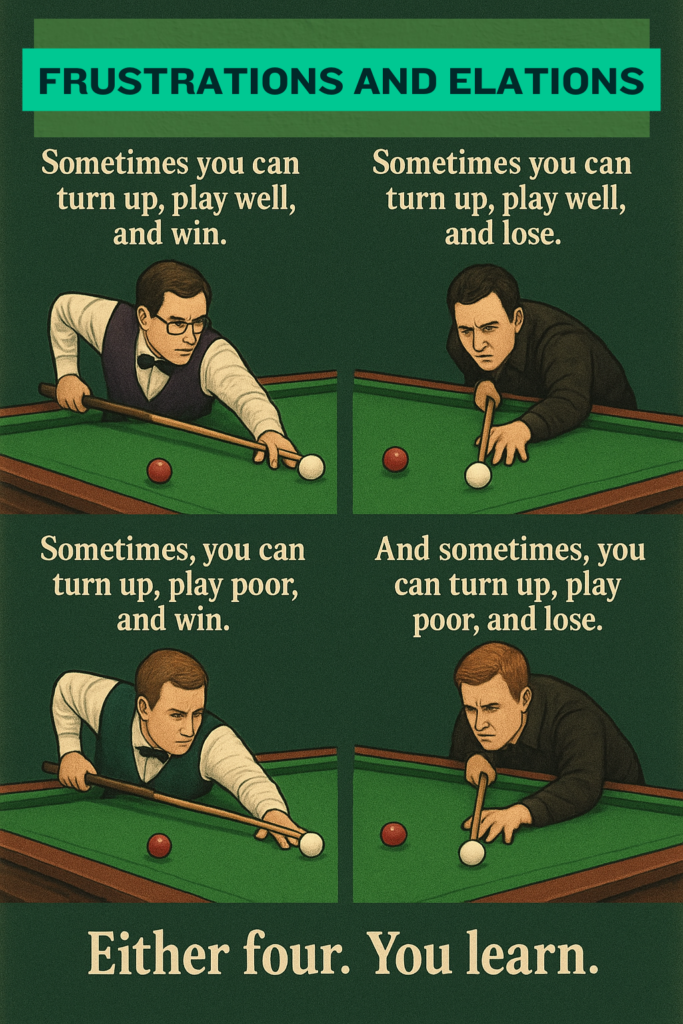
When the Pots Aren’t There: The Power of a Game Plan in Snooker
Every snooker player knows the feeling.
You walk to the table, cue in hand, and something just isn’t quite right from the off. The timing is off. The cue feels unfamiliar. Balls you’d normally expect to pot suddenly look awkward.
For many players, this is where frames are lost.
They try harder. Force shots. Chase the game. And before they know it, the frame has slipped away.
But there’s another way to approach it — and it starts with having a game plan.
Recognising When Plan A Isn’t Working
In a recent league match, it became clear early in the first frame that my potting wasn’t there – on the day before in my Doubles match – the cue was on cue.
Against a capable opponent — someone more than capable of making relatively big breaks — that can be a dangerous place to be.
The easy mistake would have been to keep attacking, hoping something clicked.
Instead, going into the second frame, I made a decision:
Change the terms of the game.
Switching to Plan B: Tight, Tactical Snooker
If the balls aren’t going in, you can still control the frame.
The focus shifted to:
- Keeping the cue ball tight
- Avoiding anything straightforward
- Playing into safe areas, particularly around the baulk cushion
- Forcing my opponent to work for every opportunity
This isn’t about negative play — it’s about smart play.
By tightening the frame, you remove rhythm. You slow the game down. And most importantly, you place a different kind of pressure on your opponent.
Applying Pressure Without Potting
Something interesting happened in that second frame.
The safety exchanges became tighter. At the beginning of the frame, I was in roughly a ten minute safety bout – which just shows containment. The frame turned into a safety scrap at times. And after the match, my opponent admitted he had become frustrated and impatient.
That’s the key.
When a player wants to “get on with it” but can’t find an easy chance, they often begin to:
- Force low-percentage pots
- Take on risky shots
- Lose patience in safety exchanges
That’s where errors creep in — not because you’re potting brilliantly, but because you’ve changed the pressure dynamic.
When you know your A game isn’t there, you need to have a plan B.
Even the top professionals will have a B and even a C game.
Measuring Performance Beyond the Scoreboard
The result didn’t go my way in the end. My opponent raised his level, he obviously realised he had to in that circumstance and took his chances when they came – but he still had it tight and I still put him under pressure.
But the frame overall told a bigger story.
- I trebled my score from the first frame
- I reduced his scoring opportunities
- I made a strong player work for every point
That’s progress.
Too often, players judge performance purely on wins and losses. But real development comes from recognising improvements within matches — especially when conditions or form aren’t ideal.
Building a Complete Match Player
The strongest players don’t rely on one way of playing.
They have:
- Plan A – when the potting and cueing are flowing
- Plan B – when the game becomes tight, tactical, and uncomfortable
Learning when and how to switch between the two is what turns a player from inconsistent to competitive.
So next time:
When you feel your potting game isn’t flowing – and not confident, try to frustrate and make the other player force the issue.
A Simple Takeaway
Next time your potting isn’t on song, resist the urge to force it.
Instead, ask yourself:
How can I make this frame difficult?
Focus on:
- Keeping it tight
- Denying easy chances
- Staying patient
You may not always win the frame — but you’ll give yourself a far better chance.
And over time, that approach builds something far more valuable than a single result:
A solid, reliable match game.